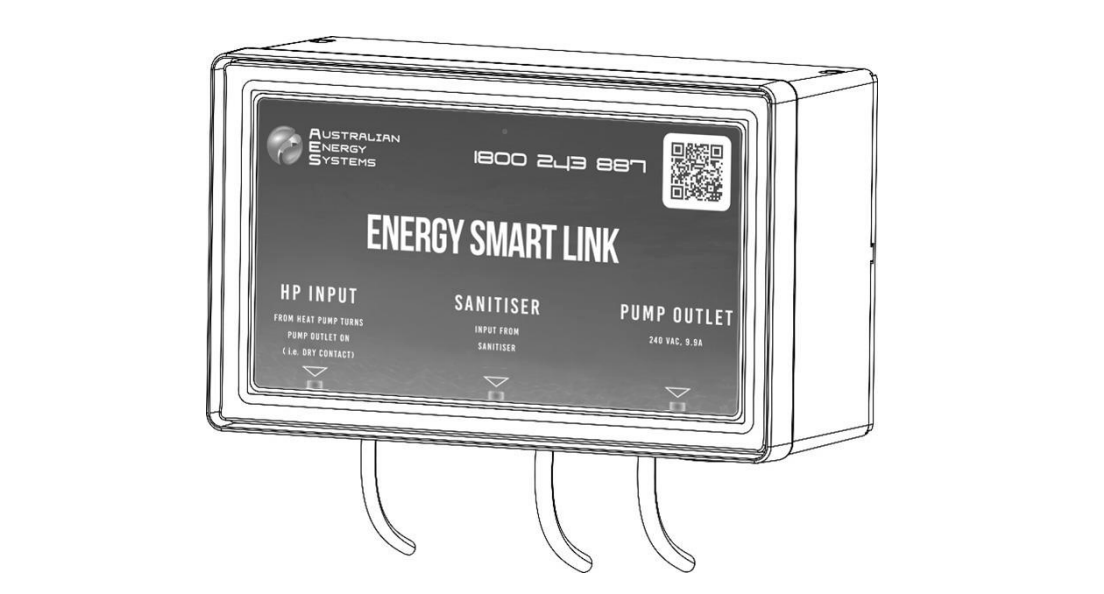
The Energy Saving Link (ESL) Controller by Australian Energy Systems is a specialised interface designed to optimise the coordination between your pool heat pump and sanitiser system. This intelligent controller reduces swimming pool running costs by enabling smart pump switching with an isolated circuit between your sanitiser and heat pump inputs.
Understanding the ESL Controller
The ESL Controller serves as the communication bridge between your heat pump and pool sanitiser, ensuring your pool pump operates efficiently based on actual demand from both systems. Unlike traditional setups where the pool pump might run unnecessarily, the ESL Controller activates the pump only when either the heat pump or sanitiser requires it, eliminating wasted energy and reducing operational costs.
This Australian-designed and manufactured controller features a simple yet effective design that integrates seamlessly into existing pool systems without requiring complex modifications or professional programming skills.
Product Specifications
Understanding the technical capabilities of the ESL Controller helps ensure compatibility with your pool equipment:
- Input Voltage: 220-245 Vac
- Maximum Input Current: 10.00 Aac
- Maximum Pump Output Current: 9.90 Aac
- Total Power Consumption: 24 Watts
- Frequency: 50/60 Hz
- Dimensions: 220mm W x 135mm H x 90mm D
- Wall Mounting: Click-on/Click-off bracket system
- Ingress Protection: IP35 rating
- Weight: 1.0 kg
- Power Cord: 10A Australian approved with piggyback socket
The IP35 rating provides adequate protection against dust and water spray, making it suitable for installation in typical pool equipment areas when positioned appropriately.
Installation Process
Installing the ESL Controller requires basic tools and careful attention to the connection sequence. You’ll need a drill with a 6.0mm drill bit and a No.2 Phillips head screwdriver.
Choosing the Installation Location
Position the ESL Controller close enough to your sanitiser, pool pump, and heat pump so all power cords can reach their respective outlets without stretching. However, ensure the controller isn’t positioned too close to other equipment or power outlets. The controller must be installed in the correct pool zone and connected to a power outlet protected by a residual current device (RCD) with a rated residual operating current not exceeding 30mA.
Mounting the Controller
The ESL Controller features a unique click-on/click-off wall mounting bracket system that protects the case from water entry. First, remove the wall bracket from the controller case by clicking it off. Mount the bracket to the wall using the provided wall plugs and screws. Once secured, simply click the controller case back onto the wall bracket. This design keeps the controller case unexposed to potential water penetration.
Making the Connections
The installation follows a specific sequence to ensure proper operation:
Heat Pump Input (HP INPUT): Connect the two-pin terminals from the HP Input cable to the potential-free dry contacts in your heat pump. This connection must be performed by qualified heat pump installers only, as this is a signal connection from the heat pump to turn the pool pump on. Any voltage on this connection will cause ESL Controller failure and void the warranty. The ESL Controller sends a 5Vdc signal to the heat pump and receives it back to activate the pool pump.
Sanitiser Input: Plug the piggyback connection from the ESL Controller’s sanitiser input into the AC socket outlet on your sanitiser unit.
Pump Outlet: Connect your pool pump’s power cord into the AC socket on the base of the ESL Controller.
Main Power: Finally, connect the plug from the rear base of the ESL Controller to a wall power socket.
How the ESL Controller Operates
The ESL Controller uses LED indicators to show the operational status of each component. The system operates based on a simple logic table that determines when the pool pump should run.
When neither the heat pump nor the sanitiser is demanding operation, the pool pump remains off, conserving energy. If the sanitiser activates but the heat pump doesn’t require heating, the pump runs to support sanitisation only. When the heat pump signals demand for heating, but the sanitiser is inactive, the pump still runs to enable heat pump operation. When both systems are active simultaneously, the pump runs to support both functions.
This intelligent switching ensures the pool pump operates only when necessary, eliminating the traditional approach of running the pump on fixed schedules regardless of actual system requirements.
Maintenance Requirements
The ESL Controller requires minimal maintenance, but periodic inspection ensures continued reliable operation. Regularly check the power leads to and from the controller for any signs of wear or damage. Inspect nearby pool equipment for leaks that could potentially impact the controller. While the IP35 rating protects against water spray, preventing exposure to standing water or direct streams extends the controller’s lifespan.
Keep the installation manual in a safe, accessible location for future reference. This proves particularly valuable if troubleshooting becomes necessary or if you need to verify installation specifications.
Troubleshooting Common Issues
Most ESL Controller issues stem from connection problems rather than component failure. Here’s how to diagnose and resolve common situations:
Controller Not Turning Pump On: First, verify the pool pump is securely plugged into the ESL Controller’s AC socket. Check that an input signal is being received from either the heat pump or sanitiser. Confirm the ESL Controller’s power cord is plugged into a wall socket and that power is available at that outlet.
Heat Pump Input LED Not Illuminated: This indicates no demand signal from the heat pump. Verify the HP Input cable is receiving a closed contact from the heat pump. Remember, the ESL Controller sends a 5Vdc signal to the heat pump and needs to receive it back to activate the pool pump.
Sanitiser LED Not Illuminated: Check that the sanitiser piggyback plug is securely fitted to the sanitiser unit and that the sanitiser is generating an output signal to turn the pool pump on.
Pump Outlet LED Not Illuminated: When this LED remains off, no demand signal is being received. Verify that either the heat pump or sanitiser (or both) is generating an on-demand signal.
Safety Considerations
The ESL Controller case contains live electrical components internally. Never open the case, as this creates a danger of electric shock. If the power cord becomes damaged, it must be replaced by the manufacturer, their agent, or a similarly qualified person to avoid hazards.
Installation must be performed by a qualified person according to AS/NZS 3000 wiring rules. This ensures compliance with Australian electrical standards and maintains warranty coverage.
The product is not intended for use by young children or individuals lacking experience and knowledge unless they receive proper supervision or instruction. Service on the unit should only be performed by qualified pool service professionals after disconnecting from the mains power supply.
Warranty Coverage
Australian Energy Systems provides a 24-month warranty against defects in workmanship and materials when the ESL Controller is used for its intended purpose and maintained according to instructions. The warranty covers repairs, parts, factory labour, or replacement units when applicable.
The warranty does not cover damage due to accident, misuse, water penetration of the enclosure, tampering, or lack of prescribed maintenance. When lodging a warranty claim, include the product serial number, purchase date, and description of the failure. Customers are responsible for returning the ESL Controller to Australian Energy Systems with proper packaging to prevent additional damage during transport.
This limited warranty represents the sole and complete warranty from Australian Energy Systems and is limited to the cost of the controller. The company is not liable for incidental or consequential damages.
Benefits of the ESL Controller System
Installing an ESL Controller significantly reduces unnecessary pool pump operation. Traditional systems run pumps on fixed schedules, operating even when heating or sanitisation doesn’t require water circulation. The ESL Controller eliminates this waste by activating the pump only on actual demand.
This intelligent control translates directly into lower electricity costs. Pool pumps represent one of the largest energy consumers in pool systems, so reducing runtime without compromising performance delivers meaningful savings. The system also reduces pump wear by limiting operating hours, extending equipment life and compounding energy savings.
Installation Best Practices
Position the controller where LED status is easily visible. Ensure all cable connections are secure and protected from water exposure. Consider labelling connections for future reference to simplify troubleshooting and maintenance.
Test the system after installation by activating the sanitiser alone, then the heat pump alone, then both together. Verify the pump responds appropriately in each scenario to confirm all connections work correctly.
Support and Service
Australian Energy Systems provides comprehensive support through their Slacks Creek, Queensland facility. Contact at +61 7 3299 2700 for technical assistance, service inquiries, and additional resources.
Conclusion
The Energy Saving Link Controller delivers intelligent pool pump control by coordinating operation with actual heat pump and sanitiser demand. It eliminates unnecessary runtime while maintaining full system functionality, offering a practical upgrade for reducing energy consumption without compromising water quality or heating performance.